Strategy
When to attack in Zone77, and when is a standoff the better result?
When to attack: reading a battle before you commit
Attack when your army's role and the target's defenses suggest a credible edge, and when the prize is worth pursuing. Treat reports as clues, not guarantees: spy reports can be out of date. If the sides seem evenly matched, a standoff may be preferable to forcing an uncertain contest.
Compare what each army is meant to do
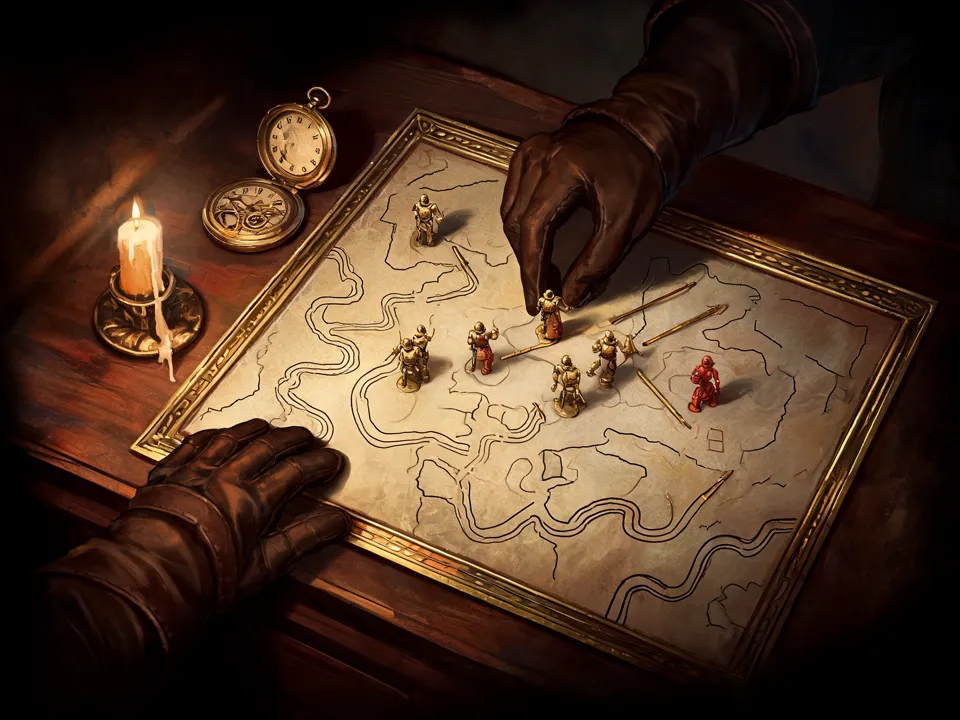
A useful attack and defense decision starts with roles, not a simple count of soldiers. Guards defend, fighters attack, spies gather information, riders are fast, and wall breakers damage Walls. Ask whether your force is suited to the task: a group built around attacking may not be the right choice for every target, and a defender's purpose is different from an attacker's.
Think about the target you want to reach. If your aim is to damage a Wall, wall breakers have a specific role. If you are judging a town's protection, guards matter because they defend. These roles do not tell you the outcome by themselves, but they help you reason about what each army can contribute. For unit roles, see the guide to soldiers.
See also: the guide to soldiers.
Treat information as a snapshot
Spies report a town's resources, soldiers, and buildings. That can help you decide whether a target fits your plans, but the report is only a snapshot and may be out of date. Avoid treating it as a promise about what you will meet when your attack arrives. Use it as one piece of evidence alongside your own judgment.
A practical question is whether the available information is fresh enough to support the risk. If you cannot tell whether the picture still holds, pause rather than assuming the town has stayed unchanged. A report can inform your choice, but it cannot remove uncertainty. The guide to spies explains what those reports include.
See also: the guide to spies.
Know what a standoff means
In battle, one side's attack power meets the other side's defense power. The stronger side wins. When the fight is close, it becomes a standoff: nobody wins, the attackers pull back, and they take no resources or damage the Wall. That is not the same as winning, but it can be a better outcome than making a commitment without a clear reason.
A failed attack does not cost the whole army, and a lost defense does not cost all the defenders. Still, do not mistake that protection for a reason to attack carelessly. Before committing, ask what you hope to gain and whether the likely result supports that goal. For a fuller explanation, see the guide to attacks and defense.
See also: the guide to attacks and defense.
Questions and answers
Does a close fight mean I win nothing?
A close fight is a standoff. Nobody wins, and the attackers pull back without taking resources or damaging the Wall. It can be a useful outcome when pressing an uncertain attack has no clear purpose.
Can a spy report guarantee what I will face?
No. A spy report lists resources, soldiers, and buildings, but it is a snapshot and can be out of date. Let it guide your judgment without treating it as a guarantee.